
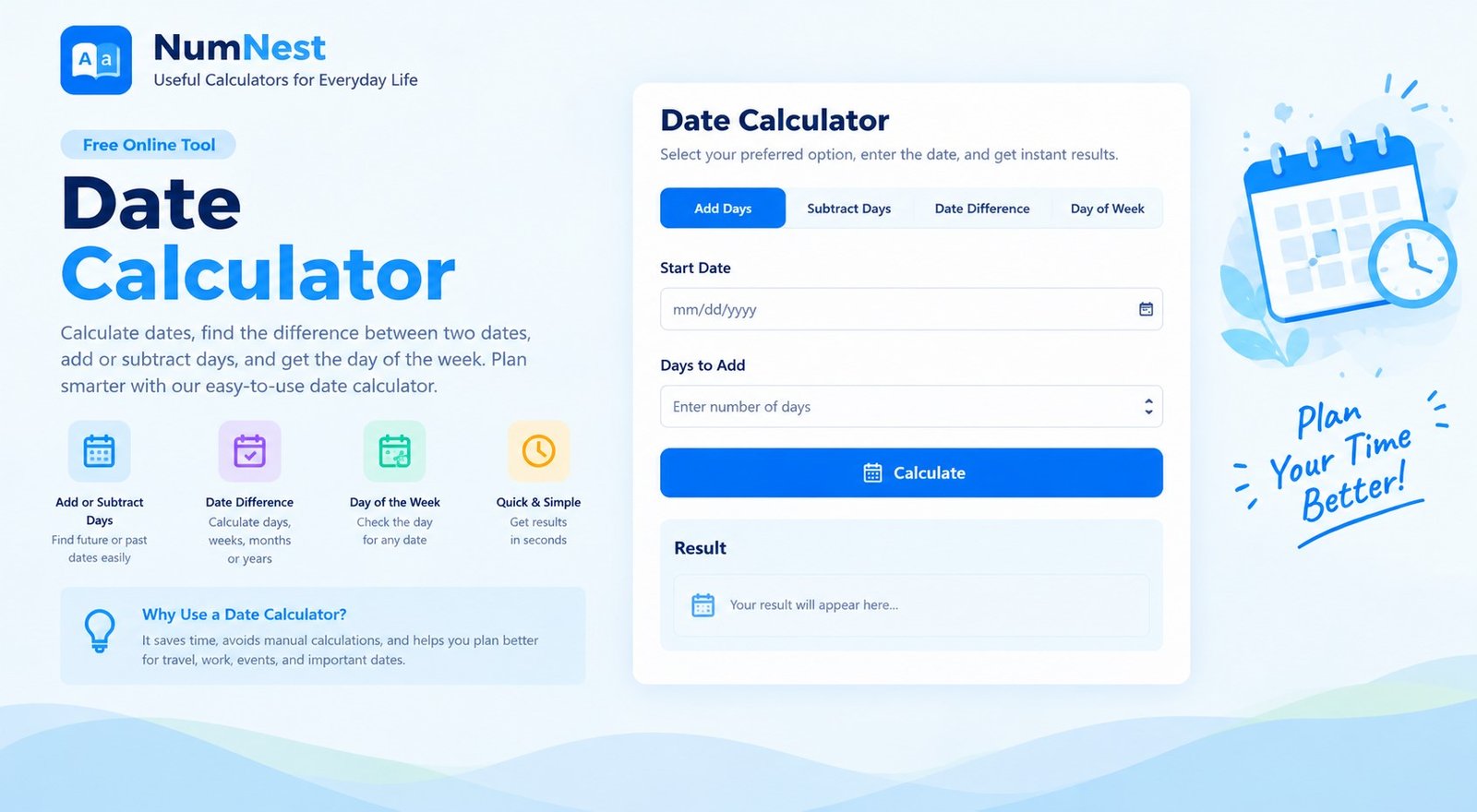
Date Calculator
Calculate the number of days between two dates, or find a future or past date by adding or subtracting days. This free date calculator is useful for deadlines, trip planning, project schedules, and everyday date calculations.
Calculate Dates
How To Use The Date Calculator
- Choose whether you want the days between two dates or want to add or subtract days.
- Select a start date. For date arithmetic, enter a whole number of days.
- Click Calculate to see the result.
How Are Days Between Dates Counted?
The default difference counts the elapsed calendar days between the selected dates and does not count the starting date as an additional day. For example, Monday to Tuesday is one elapsed day. If you need to count both the first and last dates inclusively, add one day to the difference when the end date is on or after the start date.
Common Uses
- Count days until a deadline, appointment, holiday, or event.
- Estimate the length of a trip or project schedule.
- Find a date a given number of days before or after a starting date.
- Check date ranges for planning and personal organization.
Frequently Asked Questions
Does The Calculator Include Leap Years?
Yes. It uses calendar dates, so leap days are included automatically when they fall within the selected range.
Does It Count The Start Date?
For the difference between dates, it reports elapsed days, which excludes the starting date as a separate counted day. Inclusive counting can be one day higher.
Can I Calculate A Date In The Past?
Yes. Choose Subtract days from a date and enter how many days to subtract.
Is The Date Calculator Free?
Yes. It runs in your browser and does not require an account.
Ways To Use A Date Calculator
A date calculator can help plan deadlines, count days until an event, measure a project length, work out a return date, or add and subtract calendar days. It is useful for assignments, travel planning, milestones, and general scheduling.
Counting Days Between Two Dates
Decide whether you need elapsed days or an inclusive count. Elapsed days normally measure the difference from one date to another; the starting date is not counted as a complete elapsed day. An inclusive count includes both the start and end dates and may be one day higher.
Adding Or Subtracting Calendar Days
Adding 10 calendar days means moving forward across weekends and holidays as well as weekdays. This differs from business-day calculations, which usually exclude weekends and may exclude public holidays.
Leap Years And Month Lengths
A leap year has 366 days and includes February 29. In the Gregorian calendar, a year divisible by 4 is usually a leap year, except century years must also be divisible by 400. Months have different lengths, so adding days is not the same as adding the same number of months.
Calendar Days Vs. Business Days
Calendar-day calculations include every date. Business-day calculations usually skip Saturdays and Sundays, and some also skip public holidays. For a contract deadline, visa period, court date, or payment due date, verify official rules because counting conventions and holidays can matter.
Date Calculator FAQs
Does The Start Date Count In The Result?
Elapsed-day calculations typically count the time between dates, not both dates inclusively. For an inclusive period, add one day when the applicable rules require both endpoints to count.
Why Does February Sometimes Have 29 Days?
February has 29 days in a leap year and 28 days in a common year.
Can This Calculate Working Days?
This tool is intended for calendar-date arithmetic unless a dedicated business-day option is provided. Check weekends and local holidays separately for official deadlines.